

· By Admin
How to Choose Hypoallergenic Cat Food Well
A cat who keeps scratching at her ears, vomiting after meals, or leaving loose stools in the litter box does not need another random bag of food. She needs a thoughtful plan. To choose hypoallergenic cat food well, start by separating a true food sensitivity from the many other issues that can look like one - then select a complete diet your cat can digest and thrive on.
Food can be a powerful part of lifelong feline wellness, but no label can diagnose an allergy. Fleas, environmental allergies, skin infections, parasites, stress, inflammatory bowel disease, and fast diet changes can all cause symptoms that owners may understandably blame on food. A quality diet supports the body every day. The right one for a sensitive cat also removes unnecessary dietary guesswork.
When a Hypoallergenic Diet Makes Sense
Food reactions in cats can show up in more than one way. Persistent itching around the face, ears, neck, or paws is common. So are recurring ear problems, overgrooming, vomiting, gas, soft stools, or chronic diarrhea. Some cats have both skin and digestive signs.
These symptoms deserve a veterinary conversation, particularly when your cat is losing weight, refusing food, vomiting repeatedly, has blood in the stool, or seems painful or lethargic. Cats can become seriously ill when they stop eating, so do not wait out a sudden appetite change in hopes that a new food will solve it.
If your veterinarian suspects a food reaction, an elimination diet is often the clearest path forward. This means feeding a carefully selected diet for a set period, commonly eight to 12 weeks, with no flavored treats, table food, scavenged snacks, or flavored medications unless your veterinarian approves them. It is not exciting, but consistency is what turns a diet trial into useful information.
What “Hypoallergenic” Really Means on a Cat Food Label
The word hypoallergenic generally means a food is formulated to be less likely to trigger reactions. It does not mean every sensitive cat will tolerate it, and it is not a guarantee that the food contains no possible allergens. Cats react to individual proteins and ingredients, not marketing language.
There are two common approaches. A limited-ingredient diet uses a short, deliberate ingredient list, often with a protein your cat has not eaten before. A hydrolyzed-protein diet uses proteins broken into very small pieces, which may be less recognizable to the immune system. Hydrolyzed diets are often used under veterinary direction, especially when a strict diagnostic trial is needed.
A limited-ingredient food can be a practical choice for cats with mild sensitivities or for owners trying to simplify a crowded feeding routine. It depends on the cat's history, though. A “novel” protein is only novel if your cat has not encountered it before. If chicken has been a staple in every food, treat, and topper she has eaten, switching to another chicken-based recipe is unlikely to clarify whether chicken is a problem.
Look Beyond the Front of the Bag
Turn the bag over and read the full ingredient panel. Start with the protein sources, then look for extra animal proteins, broths, fats, meals, flavorings, and treats that could complicate a sensitive cat's diet. A recipe can appear simple from the front while including several proteins further down the list.
Ingredient quality matters, but a long list is not automatically bad and a short list is not automatically better. The goal is purposeful formulation: digestible ingredients, identifiable protein sources, and no unnecessary additions that make it harder to understand what your cat is eating.
For many health-conscious owners, avoiding wheat, gluten, corn, and heavily processed filler ingredients is a sensible preference. Still, these ingredients are not automatically the cause of every cat's symptoms. Focus on your own cat's response and the diet trial your veterinarian recommends rather than assuming that grain-free alone equals hypoallergenic.
How to Choose Hypoallergenic Cat Food for Daily Health
Once you know the type of diet your cat needs, make sure it is built to nourish a cat, not merely avoid an ingredient. Cats are obligate carnivores. They require animal-based nutrients, including taurine, and benefit from a diet designed around highly digestible, meat-conscious nutrition.
Look for a statement that the food is complete and balanced for your cat's life stage. A growing kitten, healthy adult, pregnant or nursing cat, and senior cat do not all have identical nutritional needs. A food that helped one friend's cat may not be appropriate for yours.
Consider these practical questions as you compare foods:
- Is the protein source clearly identified and appropriate for your cat's elimination plan?
- Is the diet complete and balanced for the correct feline life stage?
- Does the recipe avoid ingredients your cat has reacted to or needs to avoid during a trial?
- Is the food made by a company that can explain its nutrition standards and offer knowledgeable support?
- Can you feed it consistently, in the correct portion, without adding unapproved extras?
Digestibility, Portion Size, and the Transition Period
Sensitive digestion does not always mean a cat needs less nutrition. It may mean she needs food that delivers more usable nutrition in a smaller, sensible portion. Nutrient-dense foods can support healthy stools and steady body condition without asking the digestive system to process excessive volume.
Measure meals rather than filling the bowl by eye. Free-feeding can make it difficult to track appetite, identify digestive changes, and prevent gradual weight gain. If your cat is accustomed to grazing, you can still offer several small measured meals each day.
Unless your veterinarian directs a faster change, transition to a new food gradually over seven to 10 days. Begin with a small amount of the new recipe mixed into the current food and increase it slowly as your cat tolerates it. A sudden switch can cause loose stool or vomiting even when the new formula is an excellent fit.
For a medically supervised elimination diet, follow your veterinarian's instructions exactly. In some cases, mixing foods or extending the transition may interfere with the purpose of the trial. Ask before making adjustments.
Keep a Simple Symptom Record
A brief daily record can make a major difference. Note how much your cat ate, stool consistency, vomiting, scratching, ear irritation, coat condition, and any treats or medications. Photos of skin changes can also help. Improvement may be gradual, especially with skin symptoms, so memory alone is not always reliable.
Do not judge a food by one good day or one imperfect litter-box visit. Look for a pattern over several weeks. More comfortable skin, fewer digestive episodes, a shinier coat, normal stools, and steady energy are meaningful signs that the overall plan is working.
Do Not Forget the Rest of the Feeding Routine
Food is the foundation, but the bowl is not the whole picture. Fresh water, clean dishes, a calm feeding area, parasite prevention, dental care, and routine veterinary exams all support better outcomes. For cats with chronic digestive or skin concerns, supplements should be chosen carefully. Even a well-intended fish oil, probiotic, or flavored chew can introduce ingredients that disrupt an elimination trial.
After a successful trial, your veterinarian may recommend reintroducing individual ingredients to confirm the trigger. This step can feel inconvenient, yet it prevents unnecessary lifelong restrictions. Knowing whether your cat truly reacts to a specific protein gives you a clearer way to feed her well for years.
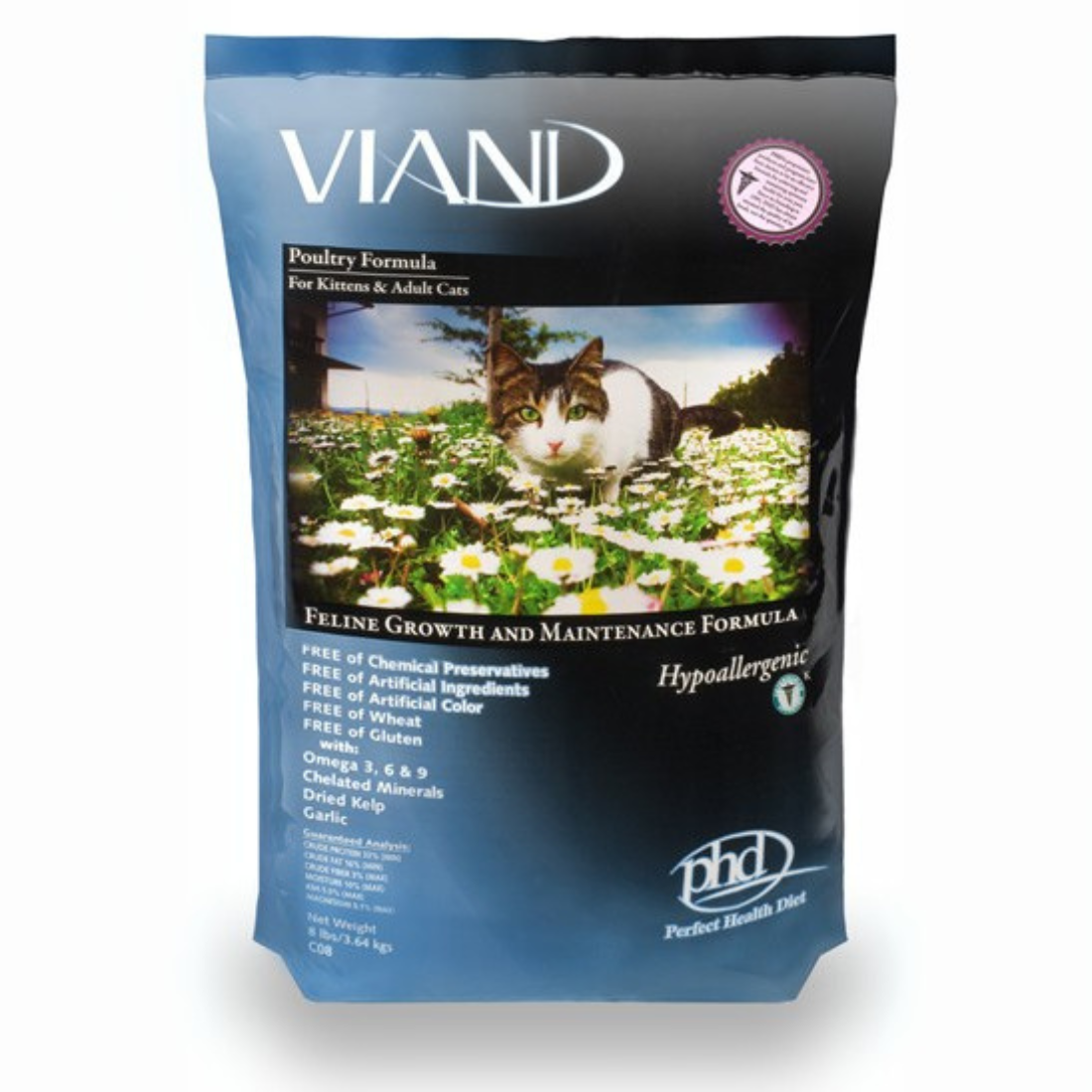
ViandPet's approach to feline nutrition begins with the same practical principle: use natural, highly digestible ingredients and feed with intention. Premium food should do more than sound appealing on a label. It should help support regular digestion, healthy skin and coat, satisfying meals, and the everyday vitality you see at home.
The best choice is not the bag with the boldest allergy claim. It is the complete, digestible food that fits your cat's individual history, is fed consistently, and leaves your furry friend more comfortable in her own skin.