


· By Admin
How to Calculate Dog Calorie Needs Accurately
A measuring cup can look like a simple answer, but it cannot tell you whether your dog is gaining slowly, losing muscle, or receiving more energy than they use. Knowing how to calculate dog calorie needs gives you a far better starting point than feeding by cup size alone. It accounts for your dog’s body weight, age, lifestyle, health status, and the actual calorie density of the food in the bowl.
For health-conscious owners, this matters because nutrition is not just about avoiding hunger. A consistent, appropriate calorie intake supports a healthy body condition, comfortable movement, dependable digestion, healthy skin and coat, and long-term vitality. The goal is not to chase a perfect number forever. It is to begin with a thoughtful estimate, watch your furry friend closely, and adjust with purpose.
How to calculate dog calorie needs from body weight
Veterinarians commonly begin with Resting Energy Requirement, or RER. This estimates the calories a dog needs for essential body functions while resting, including breathing, circulation, digestion, and temperature regulation.
For dogs weighing more than about 4.5 pounds, use this formula:
RER = 70 x body weight in kilograms raised to the 0.75 power
If that sounds like more math than you want at feeding time, a calculator can do the exponent for you. First, convert pounds to kilograms by dividing your dog’s weight by 2.2. A 44-pound dog weighs about 20 kilograms. The calculation is 70 x 20^0.75, which equals roughly 660 calories per day.
That 660 calories is not necessarily the dog’s daily food allowance. It is the baseline. Most dogs need a multiplier based on their life stage and daily demands.
For a quick estimate for a dog under 50 pounds, you may also use this simplified formula:
RER = 30 x body weight in kilograms + 70
It is less exact for larger dogs, but it can be a useful starting point for everyday feeding decisions.
Turn RER into a daily calorie target
Daily Energy Requirement, or DER, is the number that better reflects real life. To find it, multiply RER by the factor that best fits your dog. No multiplier replaces observation, but these ranges provide a sensible place to start.
An average neutered adult dog often needs about 1.6 times RER. An intact adult may need closer to 1.8 times RER. A dog working hard in the field, participating in endurance activities, or spending long days in cold conditions may need much more, sometimes 3 to 5 times RER depending on the workload.
Puppies require special attention. Young puppies up to about four months old may need roughly 3 times RER because they are building bone, muscle, organs, and a healthy immune system at an extraordinary rate. Puppies older than four months often need around 2 times RER, though breed size and growth rate matter. Giant-breed puppies should not be overfed in an effort to make them grow faster. Steady, controlled growth is the healthier goal.
Senior dogs are not automatically low-calorie dogs. Some become less active and need fewer calories, while others lose weight or muscle and need a more nutrient-dense diet. A senior dog’s body condition, muscle tone, appetite, dental comfort, and medical history are more useful than age alone.
Dogs needing weight loss are often started around 1.0 to 1.2 times RER based on their ideal body weight, not their current weight. This is best done with veterinary guidance, especially if your dog has arthritis, diabetes, heart concerns, or significant obesity. Cutting food too sharply can leave a dog short on essential nutrients and can make hunger difficult to manage.
Example: an active adult dog
Consider a 44-pound, neutered adult dog with a moderate activity level. His RER is approximately 660 calories. Multiply that by 1.6, and his estimated daily calorie need is about 1,055 calories.
That figure includes everything he eats: meals, training treats, dental chews, table scraps, toppers, and supplements that contain calories. If treats provide 100 calories each day, only about 955 calories remain for complete food. This is where many otherwise careful feeding plans drift off course.
Convert calories into the right food portion
Once you have a daily calorie estimate, look at the food label for calories per cup or calories per kilogram. This number is often listed as kcal/cup. One kilocalorie, or kcal, is the same as the “calorie” used in feeding discussions.
If your dog needs 1,055 calories per day and the food contains 425 kcal per cup, divide 1,055 by 425. The answer is about 2.5 cups per day. Split that amount into two meals unless your veterinarian recommends a different schedule.
Do not assume every dry food has a similar calorie count. Nutrient-dense food can provide substantially more calories per cup than a lower-quality, bulkier formula. That is one reason dogs may need a smaller serving when moving to a highly digestible food. Feed Less. Save. only works when the smaller portion still delivers complete nutrition and when it is measured accurately.
A kitchen scale is often more precise than a cup, particularly for small dogs, dogs on a weight-management plan, or foods with irregular kibble shapes. If your food lists calories per kilogram or gram, weigh the daily portion, then divide it between meals.
The calorie formula is a starting point, not a verdict
Calorie calculators cannot see your dog’s metabolism, indoor routine, mobility, or tendency to burn energy through nervous pacing and enthusiastic play. Two dogs of the same breed and weight can have very different needs.
Watch body condition over the next two to four weeks. You should be able to feel your dog’s ribs with light pressure, but they should not be sharply visible in most breeds. Viewed from above, a healthy dog generally has a visible waist. From the side, the abdomen should tuck up behind the rib cage. Thick coats can disguise weight gain, so use your hands as well as your eyes.
If your dog is gaining unwanted weight, reduce the total daily calories by about 5 to 10 percent, then reassess after a couple of weeks. If your dog is losing weight without intention, first make sure portions are measured correctly and treats are counted. Then increase calories gradually or speak with your veterinarian, particularly if weight loss comes with changes in thirst, stool, appetite, energy, or coat quality.
Avoid making daily changes based on a single weigh-in. Hydration, bowel movements, and normal fluctuations can move the scale. A weekly check, recorded consistently, reveals the real trend.
Account for treats, chews, and real-life extras
Treats should generally stay within 10 percent of daily calories. For a small dog with a 300-calorie daily target, that is only about 30 calories. A few generous treats can easily exceed it.
Training does not have to derail a feeding plan. Set aside part of your dog’s regular kibble for rewards, break treats into tiny pieces, or use lower-calorie options during high-frequency training. The reward is often the interaction, not the size of the bite.
Chews, broth toppers, peanut butter, and flavored supplements can also add up. This does not mean every extra should be removed. It means each one deserves a place in the daily calorie budget. When your dog needs targeted nutrition, choose products for a clear purpose rather than layering multiple calorie-containing extras without a plan.
When your dog needs individualized help
A calorie estimate should be reviewed by a veterinarian for pregnant or nursing dogs, dogs with kidney disease, diabetes, pancreatitis, cancer, chronic digestive trouble, or unexplained changes in weight. Dogs recovering from surgery and dogs taking medications that affect appetite may also need a tailored plan.
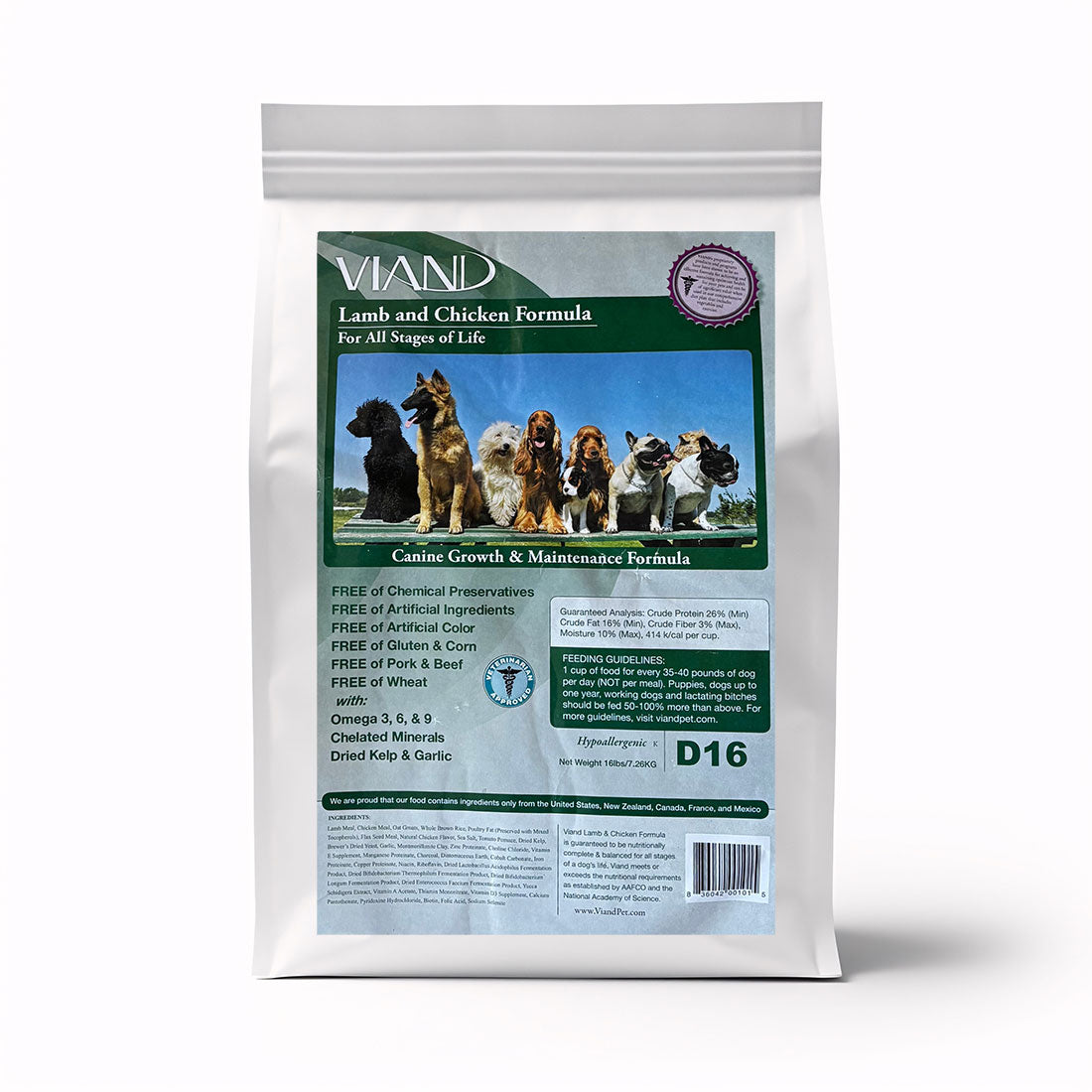
Food sensitivities can complicate feeding, too. A dog may need a particular ingredient profile for comfort and digestion, but the food still needs to meet calorie and nutrient needs in the correct amount. At ViandPet, we believe a complete, digestible diet and a measured portion work together. Premium ingredients are valuable, but even excellent food must be fed appropriately for the individual dog.
Your dog’s bowl is one of the most practical tools you have for supporting lifelong health. Start with the math, measure the food, count the extras, and let your dog’s body condition guide the next adjustment. A calm, consistent feeding routine can tell you far more over time than a scoop filled by habit.