

· By Admin
What Does Veterinarian-Approved Dog Food Really Mean?
Seeing “veterinarian approved dog food” on a bag can feel reassuring.
If a veterinarian approves it, it must be a good food, right?
Maybe. But that phrase doesn't tell you everything you need to know.
There isn't one universal definition of “veterinarian approved.” Depending on the brand, it might mean a veterinarian helped formulate the food, reviewed the recipe, consulted with the company, or simply recommends the finished product.
Those things can all be valuable. But they shouldn't be the only reason you choose a food.
What matters most is whether the food provides complete, balanced nutrition for your dog's life stage—and whether your dog actually does well eating it.
What Does “Veterinarian Approved” Mean on Dog Food?
The phrase sounds official, but it isn't a nutritional standard by itself.
That's why it's worth looking past the front of the bag.
A veterinarian's involvement can absolutely be a positive sign, especially when a company is transparent about how its food is developed. But a good dog food should also stand on its own.
You should be able to answer some basic questions:
Is the food complete and balanced for your dog's life stage? Does it provide enough protein, fat, vitamins and minerals? Is the company clear about what goes into the food and how it's made? And, just as importantly, how does your dog respond to it?
A food that works beautifully for one dog may not be right for another.
A healthy adult dog has different nutritional needs than a growing puppy. Senior dogs may need different calorie levels depending on their activity and body condition. And dogs with conditions such as kidney disease, pancreatitis, urinary problems or significant food allergies may need a diet specifically recommended by their veterinarian.
“Veterinarian approved” can be useful information.
It just shouldn't end the conversation.
Start With Complete and Balanced Dog Food
One of the most important things on a dog food package isn't the flashy claim on the front.
It's the nutritional adequacy statement.
Look for language indicating that the food is complete and balanced for the appropriate life stage, such as adult maintenance or growth.
That matters because dogs need much more than protein alone.
A properly formulated diet supplies protein and amino acids, fats, vitamins, minerals and other nutrients in the right proportions. Those nutrients work together, which is why simply looking at the first few ingredients doesn't tell you everything about the nutritional quality of a food.
Ingredient quality still matters, of course.
Many dog owners prefer foods built around highly digestible animal protein and straightforward ingredients. Others look for foods without ingredients their particular dog doesn't tolerate well.
But labels like “grain-free,” “natural,” or “high protein” don't automatically make one food better than another.
The full formula matters more than any single ingredient or marketing phrase.
Digestibility Matters More Than People Realize
Here's where nutrition stops being something printed on a bag and starts becoming something you can actually see.
Your dog has to be able to digest and use the food they're eating.
A nutrient-dense, highly digestible dog food can provide the nutrition and calories a dog needs in a smaller serving than a less calorie-dense food.
That can surprise people.
You switch foods, look at the recommended serving, and think:
That's all I'm supposed to feed?
But a bigger bowl doesn't automatically mean better nutrition.
If your dog can get what they need from a smaller amount of food, you don't need to keep filling the bowl to the same level simply because that's what you're used to seeing.
You may also notice changes in stool volume and consistency because there's less material passing through unused.
That's part of the thinking behind Feed Less. Save.
The real cost of dog food isn't just the price of the bag. It's also how much your dog needs each day and how long that bag lasts.
A more nutrient-dense food may cost more upfront while requiring a smaller daily portion.
How Do You Choose a Good Dog Food?
You don't need to become an expert in canine nutrition to make a thoughtful choice.
Start with the basics:
- Look for a complete-and-balanced nutritional adequacy statement appropriate for your dog's life stage.
- Check the calories per cup and recommended feeding amount rather than comparing foods by cup size alone.
- Look for clearly identified protein sources and a formula designed around consistent nutrition rather than trendy ingredients.
- Choose a manufacturer that can explain its ingredients, formulation and quality-control practices.
- Transition gradually when introducing a new food instead of changing your dog's diet overnight.
- Most importantly, watch your dog's weight, body condition, digestion, appetite, energy, skin and coat over time.
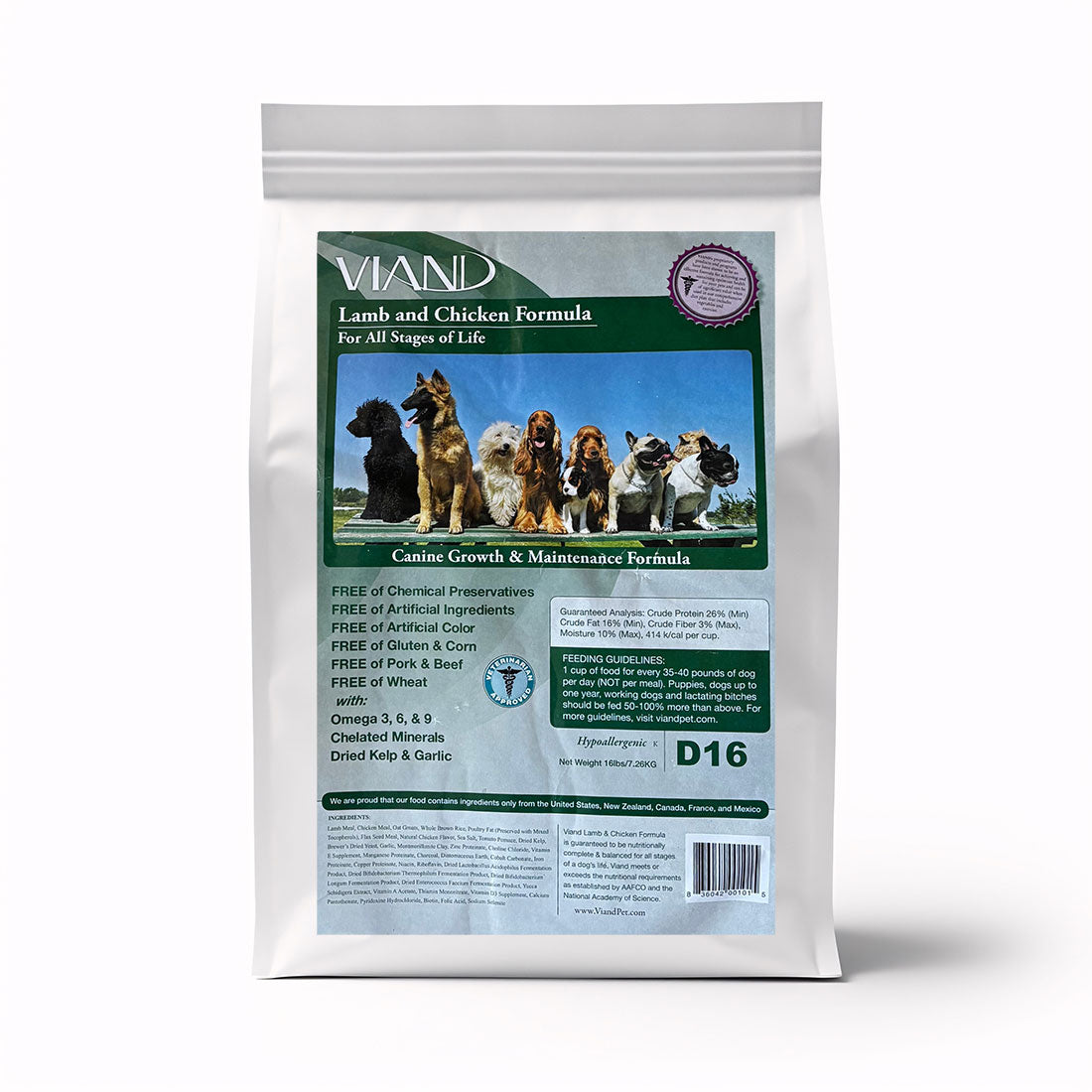
ViandPet foods, for example, are made in New York and focus on nutrient-dense formulations designed to provide meaningful nutrition without requiring an unnecessarily large serving.
The goal isn't simply to make a dog food sound impressive on the label.
It's to make a food that works well in the bowl.
Watch Your Dog, Not Just the Packaging
You can learn a lot by looking at the bag.
You'll learn even more by watching your dog.
When you introduce a new food, give your dog enough time to adjust. For most dogs, transitioning gradually over about 7–10 days can help reduce digestive upset.
Then pay attention to what happens over the following weeks.
How are their stools?
Are they maintaining a healthy weight?
Do they have normal energy?
Are they eating comfortably?
How does their skin and coat look?
You don't need perfection after every meal. One loose stool or one day when your dog doesn't finish breakfast doesn't necessarily mean the food is wrong.
You're looking for patterns.
And while you're evaluating the new food, try not to change everything else at the same time.
If you introduce a new food, three new treats, a supplement and a different dental chew in the same week, figuring out what's helping—or causing a problem—becomes much harder.
Don't Forget About Portion Size
Even an excellent dog food can contribute to weight gain if you feed too much of it.
Start with the feeding recommendation on the package, but treat it as a starting point rather than an unchangeable rule.
Two dogs of the same weight can have very different calorie needs depending on their age, activity level, metabolism and whether they're spayed or neutered.
That's why body condition matters.
For many healthy adult dogs, you should be able to feel the ribs without pressing hard, see a visible waist when looking from above and notice an abdominal tuck when looking from the side.
If your dog is gaining unwanted weight, the answer usually isn't to switch foods immediately. Sometimes the portion simply needs to come down.
And if your dog is losing weight unexpectedly, don't just keep increasing the bowl indefinitely. Unexplained weight loss is worth discussing with your veterinarian.
What About Dog Food Supplements?
If your dog's food is complete and balanced, supplements shouldn't be needed simply to fill basic nutritional gaps.
That doesn't mean supplements never have a place.
Some dogs may benefit from targeted nutritional support for their skin, coat, joints or digestion.
For example, certain fatty acids may support skin and coat health, while joint-support ingredients may be useful for some older or highly active dogs.
Digestive support may also be appropriate in certain situations.
But more nutrients aren't automatically better.
Supplements can add calories and nutrients that are already present in the diet. If your dog has a medical condition, takes medication or eats a prescription diet, talk with your veterinarian before adding anything new.
When Should You Talk to Your Veterinarian About Your Dog's Food?
Your veterinarian has one major advantage that no dog food package does:
They know your dog.
They can evaluate your dog's weight, body condition, medical history and symptoms and help determine whether nutrition may be contributing to a problem.
Talk with your veterinarian if your dog has ongoing issues such as chronic diarrhea, repeated vomiting, unexplained weight changes, persistent itching, recurring ear problems, excessive thirst or other changes that don't resolve.
Sometimes food is part of the answer.
Sometimes it isn't.
Switching from one food to another over and over without identifying the underlying problem can make things more confusing.
So, Is Veterinarian-Approved Dog Food Better?
It can be a positive sign.
But the words “veterinarian approved” shouldn't be the only thing you look for.
A good dog food should provide complete and balanced nutrition, suit your dog's life stage, deliver appropriate calories and nutrients, and produce good real-world results for your dog.
And that's ultimately what matters most.
Not the biggest marketing claim.
Not the longest ingredient list.
Not how full the bowl looks.
The goal is simple: give your dog the nutrition they need, in an amount that makes sense for them.
That's what Feed Less. Save. is really about.
Feed the amount your dog actually needs.
Give them useful nutrition in every serving.
And let the results—not just the words on the bag—tell you whether the food is working.